

HIA Image
Press Release: HIA Launches 4 AI Features Built Natively into its Hospitality ERP
Hotel ERP and Accounting Software Logo Hotel ERP and Accounting Software Logo
  • Home
  • Platform
      Hospitality Accounting & Operations
    • AI-Powered Platform
      Backoffice Automations

    • Hotel ERP Platform
      Ops & Accounting Clarity

    • Integrations
      60+ Hospitality Specific
    • Features & Capabilities
      Built for Hotels

    • GSS Analysis
      Rep Mgmt, Comp Sets, Rate Intel
    • Business Intelligence
      Your Whole Hospitality Timeline
    • Mobile App
      Your Backoffice in Your Pocket
  • Features By Role
    • For Finance Teams
    • For Operations
    • For Executives
    • For Owners
  • About Us
    • Executive Team
    • Acumatica
    • Awards
    • Board of Directors
    • Support
    • Careers
    • Contact Us
  • Resources
    • Blog
    • In The News
    • Customer Stories
    • Guides & Downloads
    • Videos
Request A Demo

Beyond Month-End: Unlocking The Strategic Potential Of Your GM Critique

July 1, 2026
By Jaime Goss
  • Business Intelligence
  • AI
  • Features: Operations
Unlock the Strategic Potential of your GM Critique

As we get deeper into the age of AI, many hotel leaders are beginning to reevaluate their reporting structures. And while much of the conversation has focused on dashboards, analytics, and automation, the GM Critique has quietly become one of the most frequently requested reporting improvements among corporate and property users. 

Few reports hold more value to ownership and management teams. Yet despite its importance, the process behind the report has changed surprisingly little over the years. But now, the technology is finally catching up to what operators have been asking for: a simpler way to aggregate data and provide a more standardized, flexible, and sustainable report direct from your business intelligence (BI) software. 

Key Takeaways
  • Every month, GMs spend valuable time rebuilding information that already exists in the business. 
  • Standardizing the GM Critique allows teams to capture that knowledge once and use it across the portfolio. 
  • Transforming the GM Critique from a month-end exercise into a living document can support daily, weekly, monthly, and quarterly decision-making. 
  • The stronger your reporting foundation is today, the more value you’ll get from tomorrow’s AI and BI tools. 

What a Complete GM Critique Actually Contains

Every hotel has some version of the GM critique, whether it’s called a scorecard, a monthly review, or something else entirely. Its purpose is to answer a simple question: what’s really happening at the property? 

Why did labor miss the budget? Why did expenses come in high? Why are GSS scores slipping? Why is one hotel outperforming its comp set and another isn’t? Because when ownership reviews a property, they’re not just looking at numbers; they’re assessing the health of an asset. 

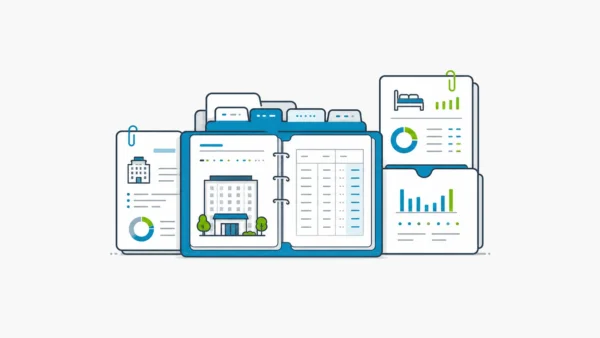
The GM Critique has traditionally provided the essential information to connect the dots between the numbers and the events that produced them, such as: 

  • Financial Variance Analysis (The “Why” Behind the P&L)
  • Market Dynamics and Comp Set Performance (The STR Story)
  • Guest Satisfaction and Quality Assurance (The Sentiment)
  • Human Resources and Labor Diagnostics
  • Capital Expenditure (CapEx) and Asset Health
  • The Forward-Looking Forecast and Action Plan

As the person responsible for making the day-to-day decisions and understanding the market conditions surrounding the choices made for the month, GMs carried context that didn’t exist inside any of their systems. So, they often became the sole translators of the operational realities behind the performance metrics that ownership was reviewing. 

The Cost of Rebuilding the Story Every Month 

Most GMs have come to accept (and maybe even dread) that the last few days of the month are going to be just a bit more stressful than the rest. The hotel doesn’t stop operating just because the reporting cycle has started. Guests still need attention. Staffing issues still need to be solved. Revenue still needs managing. 

Yet, GMs are expected to stop and anticipate the questions executive leadership might have regarding financials, operations, and performance for that month. Since they are one of the only ones who can own those choices, they spend hours pulling STAR reports, labor data, AR balances, guest satisfaction scores, and more just to have the answers ready for when ownership reviews the numbers. And this comes with costs that sometimes get overlooked. 

The first is that it takes away precious hours that the GM could spend leading teams, responding to market conditions, and improving performance. Instead, they are spent assembling information that has no standardized format, so GMs are responsible for building it as they see fit. 

Another, perhaps more detrimental, cost is that there’s no way for that individualized operational knowledge to become part of the portfolio’s system, where others can learn from it later. The reasoning behind decisions, the context surrounding variances, and the lessons learned are lost if/when that GM leaves.

Changing the GM Critique From Month-End to a Daily Resource

While the GM Critique has traditionally been a month-end or quarterly report, there’s no reason it has to stay that way. Many of the questions ownership asks at month-end are ones that GMs are asking and dealing with all month long. 

If operators had a way to capture those answers as they happened (rather than during the last week of the month), the GM Critique could become a live document that users can harness to make better decisions. For example, a daily critique could provide a snapshot of current performance before a GM has to make staffing decisions. A weekly one could serve as a soft alert to pace trends and labor issues before they impact the month. The monthly/quarterly reviews would still occur, but they wouldn’t have to be the first time anyone sees the information. 

That’s what HIA’s new GM Critique tool makes possible. It’s designed to capture the information that has historically lived in spreadsheets, emails, and conversations and preserve it in a way that helps teams learn from the past, align around the present, and make better decisions moving forward. 

The Notes Field Changes Everything

Having the ability to attach notes directly to the report gives GMs a much easier way to tell the story behind the numbers. 

If an unexpected group booking requires additional staffing, the GM can make a note of it in the system. If the property accrues funds for a future phone replacement project that isn’t large enough to qualify as a capital expense, the reasoning can be documented alongside the charge. If guest satisfaction scores dip because of a temporary operational issue, the explanation can be recorded while the details are still fresh. 

Whatever situation the GM finds themself in, they can immediately connect their knowledge to the metric it relates to. That creates a much richer reporting experience for everyone involved. 

Since the explanation travels with the report, it makes it easier for ownership, management companies, and property teams to work from the same information. It also creates a historical record that can be referenced later when reviewing similar situations. 

As AI capabilities continue to evolve, that context becomes even more valuable. Instead of trying to remember why labor ran high six months ago or why money was accrued for a specific project, GMs can quickly reference the decisions and explanations that were documented at the time. The goal isn’t to replace human judgment. It’s to give teams better access to the knowledge they’ve already created so they can make faster, more informed decisions in the future. 

Building the Foundation for Better Decisions 

The hospitality industry is moving quickly toward a future shaped by AI and increasingly sophisticated BI reporting tools. However, these tools won’t give you the most bang for your buck without a strong foundation.

To generate the best insights, these tools need standardized data. To be able to maximize automation capabilities, they need consistency. To have AI help explain performance, there has to be context for it to learn from. 

The GM Critique may seem like a small piece of that puzzle, but it’s an important one. By creating a structured, repeatable way to capture both performance data and operational context, your organization can start establishing the foundation that future tools will rely on. 

If you’re ready to spend less time assembling information and more time acting on it, schedule a demo with HIA to see how we can help your team build a stronger foundation for better decisions. 

Jaime Goss
Jaime Goss

Jaime Goss has over a decade of marketing experience in the hospitality industry. At Hotel Investor Apps, Jaime heads up marketing initiatives including brand strategy, website design, content, email marketing, advertising and press relations.

« AI-Driven BI Is Finally Giving Hotel Reporting Context

Recent Posts

AI-Driven BI (Business Intelligence) is finally giving hotel reporting context

AI-Driven BI Is Finally Giving Hotel Reporting Context

June 4, 2026
Why back office fundamentals still matter in the age of AI

Why Back Office Fundamentals Still Matter in the Age of AI

May 20, 2026

In The News

HIA Promotes Two Senior Leaders, Launches Dedicated Customer Success Department

July 2, 2026
HIA Launches 4 AI Features Built Natively into its Hospitality ERP

HIA Launches 4 AI Features Built Natively into its Hospitality ERP

June 17, 2026

Case Studies

Rainmaker Hospitality Builds a Foundation for the Future with HIA ERP & Accounting Software

Rainmaker Hospitality Builds a Foundation for the Future with HIA ERP & Accounting Software

May 4, 2026
Platform Business Advisors scales smarter with HIA Hospitality ERP

Platform Business Advisors Scales Smarter with HIA Hospitality ERP

March 26, 2026

Downloads

Recover Up to 75 Hours Per Hotel Per Month

Recover Up To 75 Hours Per Hotel, Per Month

December 15, 2025
US Lodging Industry Update: The End of the Doldrums? Outlook for 2026 by R. Mark Woodworth

Outlook for 2026 – The End of the Doldrums?

October 22, 2025

Recent Videos

3 Best Practices For a Success Hotel Accounting Software Implementation

3 Best Practices for Hotel Accounting Software Implementation

June 23, 2026

1-Minute HIA Overview

June 23, 2026
HIA - Hospitality Intelligence Acconuting Logo HIA, A Product Of © Hotel Investor Apps Inc.
All rights reserved.

  • Website Terms Of Use
  • Privacy Policy
  • Application Privacy Policy
  • Contact Us
Award
2025 Travel and Hospitality Top Hotel ERP Solution
Award
2025 Acumatica Excellence Award Vertical Innovation
Award
2026 Acumatica Excellence Award Vertical Innovation
Award
2026 HTR Finalist Best Hotel Accounting Software
Award
Level 1 Certfied Customer Support
10 Years
10 Years of Empowering Hotel Management Excellence